
Moving Away from the DEI Acronym Toward Advocacy and Change
The use of the DEI acronym has echoed the image of diversity without the real-life change that comes with true advocacy. Part of this is due to the lack of representation in those building and creating the systems of change. Part of this is due to the intentional and unintentional creation of a scarcity mindset that puts those who could benefit from DEI initiatives against one another instead of recognizing diversity as a strength.
But this isn’t the first time this has happened. It’s also happened in the conversation around feminism and how traditional conversations happen without acknowledging the perspectives and lived experiences of Black women, leading to approaches harmful to the Black community. The conversation about AI and its use in pushing toward the appearance of diversity instead of businesses and organizations choosing to put in the work to treat diversity as an organizational value has also led to leaving behind what it means to have real systems and approaches in place to advocate for diversity and change.
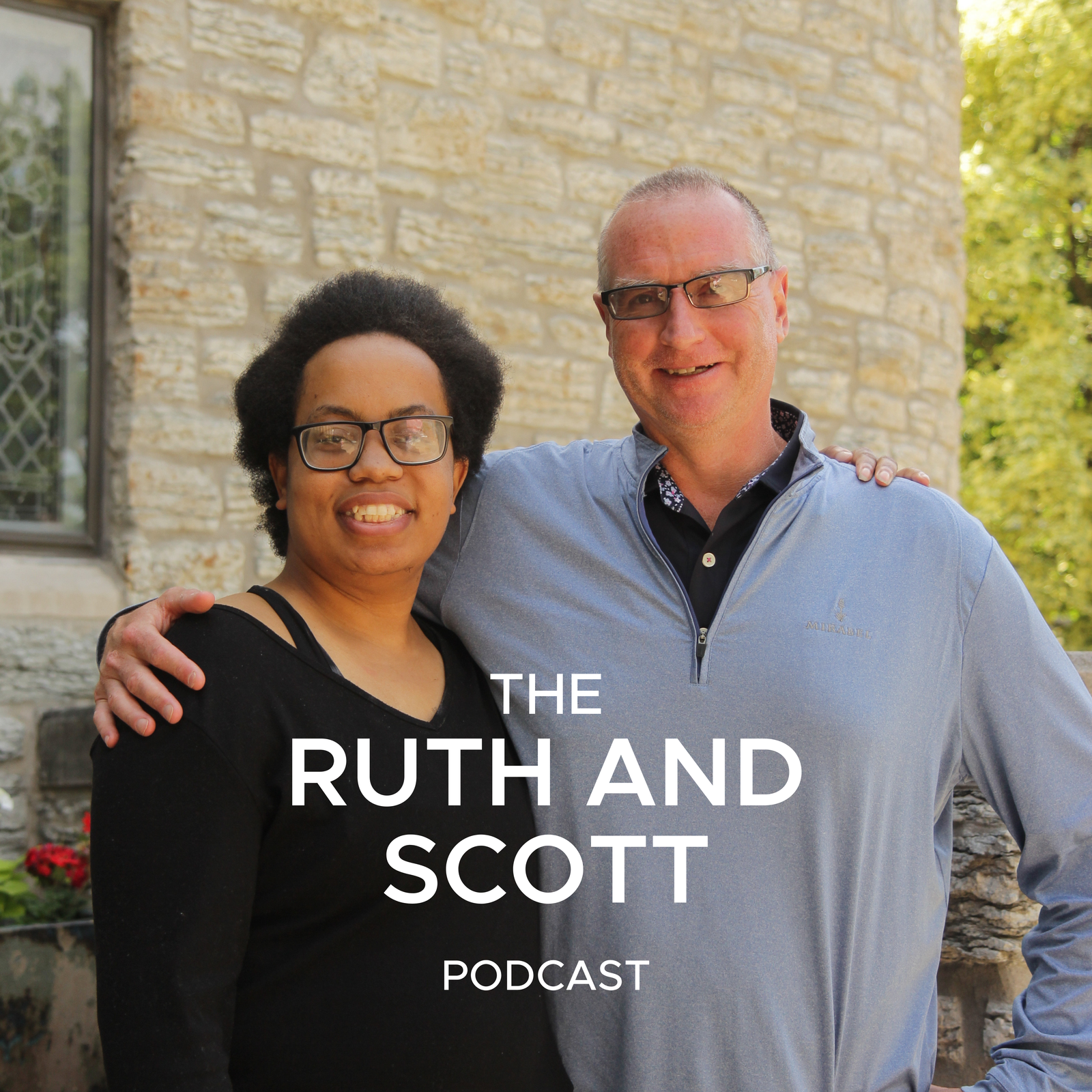
In this episode of The Ruth and Scott Podcast, Ruth Jefferson and Dr. Scott Gostchock talk about diversity, how to build a culture in your educational setting that values it, womanism, feminism, how changing terms leads to surrender in the dialogue around social change, educational marketing, and more.
Dr. Scott Gostchock brings to the table 31+ years of experience in education, administration, and community activism. His real-life stories and examples breathe new life into this conversation as he connects with co-host, Ruth Jefferson. Ruth’s lived experience, her 10+ years of experience with digital marketing and communication strategy, and her unique perspective and ability to look at history and society both as something she lives within and is an observer of make this conversation more approachable, even for listeners just starting on their journey toward better understanding the way history connects with the present and how you, as an educator, can be an active part of facilitating change.
Interested in engaging more with this conversation? Email Ruth and Scott at admin@podcast.votmg.org. Or, click here to open a new tab and leave a voice note that’s a minute or less. We love hearing from you! And, with this new feature, we can hear the voice that goes with your feedback.
Looking for that article on social media benchmarking? Click here to open it in a new tab.
FAQ
What is diversity?
Diversity means embracing the value of each person, acknowledging that part of valuing each person means seeing that each person’s ethnic identity, cultural background, socioeconomic status, and their identity as male or female are not themselves sources of value but are instead ways in which this value is expressed.
Why is it important to note that the definition of woke has changed over time?
“Woke” originally meant to be awake and aware of racism. For the in-group who originated the word, it still holds this meaning.
If you’re not familiar with the word, you may have heard, or even used, this word as a short-hand insult for things you view as forcing you into a position of political correctness, or to refer to things related to social justice as a whole, without a specific focus on what you may or may not agree with. Some who are familiar with the history of the word may still use it as a shorthand insult to hide racist intent.
There’s a difference between the original definition and the shorthand insult and its definition. This change over time is a result of the gentrification of language.
The in-group has a definition for a word, a vocabulary members of the in-group use to describe their lived experience. People not a part of the in-group start interacting with the in-group and adopting vocabulary, not understanding the history, meaning, and true context of words.
Their misuse and misunderstanding of words from a vocabulary. Sometimes this is well-intentioned. Sometimes this is done out of laziness. No matter the intention, this abuse of language causes those more distant from the in-group to come across vocabulary in ways that allow them to define them and set the terms for conversation.
The price for those who are part of the in-group becomes higher and riskier in both physical and emotional ways.
Hear what’s being said. Identify the meaning behind the words being used. Learn the context. Develop an understanding of the history. Approach communication with humility and diversity as strength.
How can you, as an educator or administrator, facilitate the creation of a culture in your setting that truly values authentic diversity?
As an educator or administrator, here are some actions and mindset shifts you can adopt today to build the kind of culture that truly emphasizes and fosters authentic diversity:
- Embrace the journey. There will be ups and downs. Know that these are part of the process.
- Allow your different team members to speak into that journey and to provide feedback as you stay connected to that mission, vision, and values.
- Make sure that the mission, vision, and values are clearly written down and in places where they’re easy to reference.
- Seek an understanding first when engaging with your community and before attempting to diagnose.
- Be willing to be held accountable and to respectfully hold others accountable. The importance of accountability is also something we talk about in the episode, The Empathy Gap: Building Responsive Community. Click here to open a new tab and listen to the episode.
Your story makes a difference. Learn how it can help you in your work with students from different backgrounds with this read.
New Episodes of The Ruth and Scott Podcast drop on the first day of every month. Be the first to know when they land. Click the button below to open a new tab and make sure you don't miss a beat.