
Classroom Management

A vivid sunset paints the sky over Mississippi River at Reads Landing, creating stunning reflections on the water.

What Life as a Military Brat Taught Me About Cultural Competence and Empathy in the Classroom

What Life as a Military Brat Taught Me About Cultural Competence and Empathy in the Classroom When Challenging the Status Quo Almost Got Me Kicked Off a Mission Trip Why does cultural competence matter for educators? Cultural competence matters because it helps you understand those you’re working with and teaching. It also provides you with a framework that helps you counter the things you don’t know—because there are always going to be things you don’t know that you don’t know. Being culturally competent means you’re creating space for that. You’re creating a framework in which you can get to know each person as a person and build relationships that foster a sense of community and belonging. Learn about how other teachers are building a sense of belonging in the classroom with this read from Edutopia. How do a student’s past experiences affect the way they show up in a new classroom or educational environment? Past experiences affect the way that anyone shows up in any new environment. It’s not surprising then that this is also the case with students entering new educational environments. Part of a student’s challenge with this entrance is that there are certain expectations in a new environment that the student might not be aware of. Each classroom culture is going to be different depending on who is leading that culture, the others inhabiting that culture, and the feedback loops that are in place. A student is at a disadvantage if they haven’t experienced how the instructor fosters the culture desired for the classroom. If a student has experienced environments where bullying happens and the teacher doesn’t do anything—or where the teacher is the bully—that promotes fear of retribution, fear of what could happen. This fear negatively affects the learning environment. What does empathy look like for an educator working with students from different backgrounds? When you share a background with someone (whether demographic, psychographic, or socioeconomic), it’s easier to see where they’re coming from because you have a greater degree of similarity that you can draw from. If you’re working with someone from a different perspective, culture, or otherwise a different set of life experiences, you’re not necessarily going to have those similarities in landmarks to refer to. Part of how you can practice empathy is getting to know the person—during educational instruction, projects, and through the feedback loops you create. You want students to understand that what they say matters and that their feedback won’t be disregarded. When your strategy isn’t just lecture-focused but also leans into questions and provides opportunities for students to share how their experience intersects with the material, it provides an opportunity to understand student perspectives and how they’re processing information. As you get that understanding, you’re able to foster greater achievement of educational outcomes and, in some cases, students’ ability to exceed them. Cultural competence matters because it helps you understand those you’re working with and teaching. It also provides you with a framework that helps you counter the things you don’t know—because there are always going to be things you don’t know that you don’t know. Being culturally competent means you’re creating space for that. You’re creating a framework in which you can get to know each person as a person and build relationships that foster a sense of community and belonging. Learn about how other teachers are building a sense of belonging in the classroom with this read from Edutopia. Past experiences affect the way that anyone shows up in any new environment. It’s not surprising then that this is also the case with students entering new educational environments. Part of a student’s challenge with this entrance is that there are certain expectations in a new environment that the student might not be aware of. Each classroom culture is going to be different depending on who is leading that culture, the others inhabiting that culture, and the feedback loops that are in place. A student is at a disadvantage if they haven’t experienced how the instructor fosters the culture desired for the classroom. If a student has experienced environments where bullying happens and the teacher doesn’t do anything—or where the teacher is the bully—that promotes fear of retribution, fear of what could happen. This fear negatively affects the learning environment. When you share a background with someone (whether demographic, psychographic, or socioeconomic), it’s easier to see where they’re coming from because you have a greater degree of similarity that you can draw from. If you’re working with someone from a different perspective, culture, or otherwise a different set of life experiences, you’re not necessarily going to have those similarities in landmarks to refer to. Part of how you can practice empathy is getting to know the person—during educational instruction, projects, and through the feedback loops you create. You want students to understand that what they say matters and that their feedback won’t be disregarded. When your strategy isn’t just lecture-focused but also leans into questions and provides opportunities for students to share how their experience intersects with the material, it provides an opportunity to understand student perspectives and how they’re processing information. As you get that understanding, you’re able to foster greater achievement of educational outcomes and, in some cases, students’ ability to exceed them. The mission center was one of those places that seemed like a blend between older architecture and internal design that was a bit more modern, but fit the space. In the entrance area, larger booths lined either side with a front desk where one could go to get more information. A session had just ended, and students met in different areas across the center. At one of the booths, a group of college students sat talking about classroom management. They were enrolled in the education department at the university and were listening to another student who was working at a school with younger students while she was attending classes. The conversation had gotten so loud that, from the next room, I heard
What Life as a Military Brat Taught Me About Cultural Competence and Empathy in the Classroom Read More »

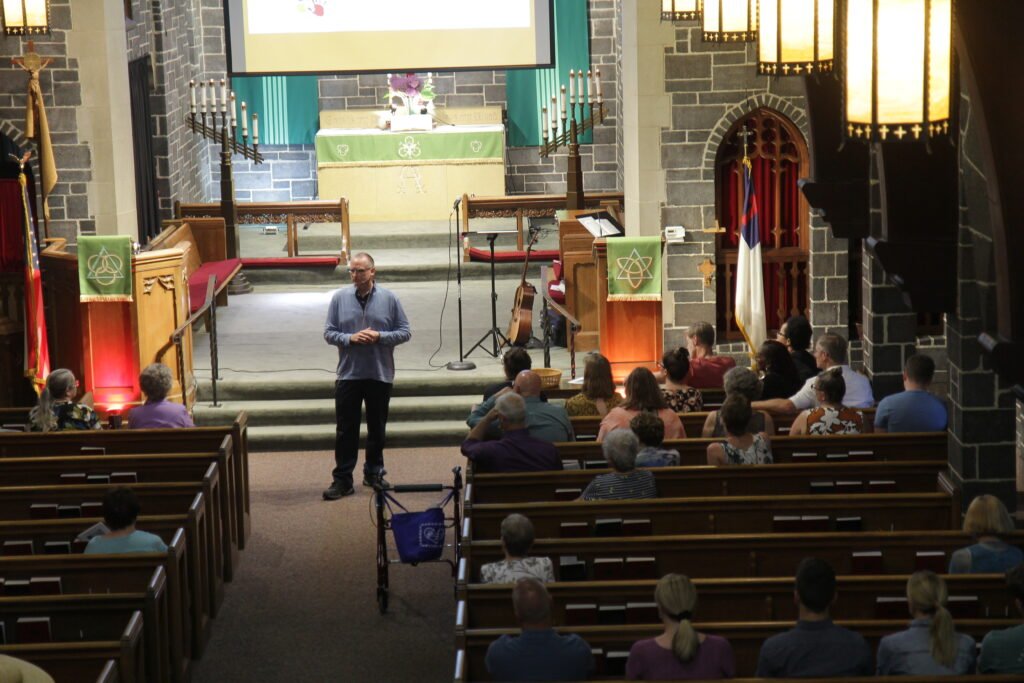
Dr. Scott Gostchock presenting in front of a church in Minneapolis, Minnesota.

3 Words and Phrases Every Educator Can Use to Speak Life and Encouragement

3 Words and Phrases Every Educator Can Use to Speak Life and Encouragement As an educator, you have an opportunity both inside of the classroom and outside of it, to operate from the places of both formal and informal influence. Here are 3 words and phrases you can carry with you into any situation to speak life and encouragement: 1. I Hear You This does much for you and for those you interact with. For you, it can help you to slow down and remind you to listen, especially if the conversation has lasted a while or has started to shift or take an unfamiliar shape. For them, even if they’re engaging from a place of being upset, sometimes that feeling of being upset comes from a feeling of being unheard or a sense of a lack of agency. Your stopping to let them know that you hear them can mean more than you know. I can think of a couple of experiences back when I worked a short stint in tech support, working with phones. Callers would call in, upset about something that was going wrong. Something that helped to de-escalate those calls was taking the time to let the person on the other end of the line know that they were heard. I’d do this through apologizing for the difficulty, taking the time to gain a better understanding of the problem they were experiencing, and showing interest in who they were and why the problem mattered to them. This allowed them to vent and to understand that we were on the same team in solving the problem ahead of us. This same kind of posture means a lot for approaching educational environments because people are people, and this desire to be heard and known is universal. People are people, and this desire to be heard and known is universal. 2. Grace This is another one of those words that makes a difference on both sides of the equation. One thing that you might forget as you serve others is that it’s important for you to have grace for yourself. You will make mistakes. Having grace for yourself will help you to have grace for others. Understanding that there’s grace for you will help you to have more understanding in your interaction with others. Grace for others helps them to feel more like they have a place in the conversation with you and builds trust that also expands into your future interactions with them. 3. You’re not alone. While “I hear you” helps with feelings of anger, “You’re not alone” can help more with navigating feelings of fear. It also communicates an openness to partnership. This helps with networking, but it can also help you in your interactions with those you have the ability to influence through formal and informal influence. A student who feels like they’re alone or unheard may likely withdraw. This withdrawal might also come with academic disengagement and a failure to achieve academic outcomes. An attitude and actions that communicate clearly “you’re not alone”, will help to fight that disengagement. Some practical actions you can take in a classroom setting include inviting students or mentees to share their experiences as they relate to educational material, incorporating group conversations and projects into the flow of the educational environment, and taking the time to meet one-on-one with students who appear to be taking those first steps toward disengagement. Join our email list today to go deeper in conversation about topics that matter like communication, relationships, mentorship, parenting, and so much more. Join Now! What does it mean for an educator to operate from informal influence? Informal influence happens outside the official role of teacher or instructor. It’s the influence you carry in conversations, how you respond to someone who’s upset, and in the way you show up for people in real and tangible ways. Learn more with this read about informal mentorship! How can saying “I hear you” help with a disruptive or upset student? Being upset can sometimes come from either a feeling of being unheard or from a place where someone feels like they don’t have any agency. Taking the time to let someone know they’re heard allows them to vent and to understand that working through challenges is a team effort. Understanding that you view it this way means a lot in educational environments. Ways you can communicate this include apologizing for difficulty, asking questions and seeking out information to gain clarity of the problem being experienced, and showing interest in who your student is and why the problem they’re facing matters to them. Love is at the heart of every effective mentor relationship. Learn more with this episode of The Ruth and Scott Podcast! Why is grace important for educators, not just students? Educators make mistakes, too. Having grace for yourself is what makes it possible to extend grace to others. When you understand that there’s grace available for you, it changes how you interact with the people you serve and builds the kind of trust that carries into future interactions.  How does hearing “you’re not alone” help prevent academic disengagement? A student who feels isolated is more likely to withdraw, and that withdrawal often leads to academic disengagement. Communicating clearly to a student that they are not alone helps fight that pull toward disconnection before it takes hold. Consistency in both words and actions is key to this communication.  What are some practical classroom actions that help students feel less alone? Inviting students to connect their own experiences to learning material, incorporating group conversations and projects, and making time for one-on-one check-ins with students who appear to be pulling away are all practical ways to build a classroom environment where students feel like they belong.  Informal influence happens outside the official role of teacher or instructor. It’s the influence you carry in conversations, how you respond to someone who’s upset, and in the way you show up for people in real

3 Words and Phrases Every Educator Can Use to Speak Life and Encouragement Read More »