
3 Reasons Why The Civil Rights Movement is Important to the Classrooms of Today
The Civil Rights Movement honors the moments and courage of the past. But if this is where you leave the conversation, you’re missing something. You’re emphasizing denial. Denial of the goals of the past. Denial of the truth of the present. Denial of the dream still to be fulfilled. As an educator, you have a front row seat to the consequences of this denial. What you might not have is an understanding of what the Civil Rights Movement means for you in your context. Here are 3 reasons it’s important and what it can mean for you and the students in your classroom.
Societal challenges faced by students don’t stay outside of the classroom.
Research highlights the role that societal events and relational trauma have in affecting student learning. Circumstances such as police violence and the actions of agencies like ICE that separate families can result in outcomes like disrupted attachment, student withdrawal, survivor’s guilt, difficulty in forming bonds, hypervigilance, and feelings of powerlessness. Click here to open a new tab and access a 2023 article from The New York Times that presents information about the effects police violence has on the lives of the mental health of black people. Click here to open a new tab and access an article from the North Carolina Justice Center that explores the ACEs of ICE. Even students who aren’t directly exposed to these sorts of traumas have friends within the classroom who do. Because of this, it’s difficult to separate societal challenges from your role as a teacher. It could be argued that the classroom and the partnerships that exist there between yourself as an educator, the parents of students, the school staff, and the students themselves mean that the classroom is uniquely equipped to be the space where this conversation happens.
The history of the Civil Rights Movement highlights the importance of student agency.
Feelings of powerlessness can be countered by the recognition and exercise of agency, something that students in general may not realize that they have. Agency is defined as the sense of control over actions and what happens as a result of those actions. In other words, to understand one’s agency, one must know that they can take action and that what results can be reasonably approximated based on that action they’ve chosen to take. When societal challenges arise or systems appear to be out of sync with the principles one would expect, this sense of agency is disrupted. This is in addition to the lack of the realization of agency practiced by younger students for whom so much of their world is curated around the beliefs and lifestyles of parents and other authority figures in their lives. One way to facilitate the building of a sense of agency in students is through social entrepreneurship. Click here to open a new tab and learn how social entrepreneurship and partnership can be gamechangers in the process of building childhood agency.
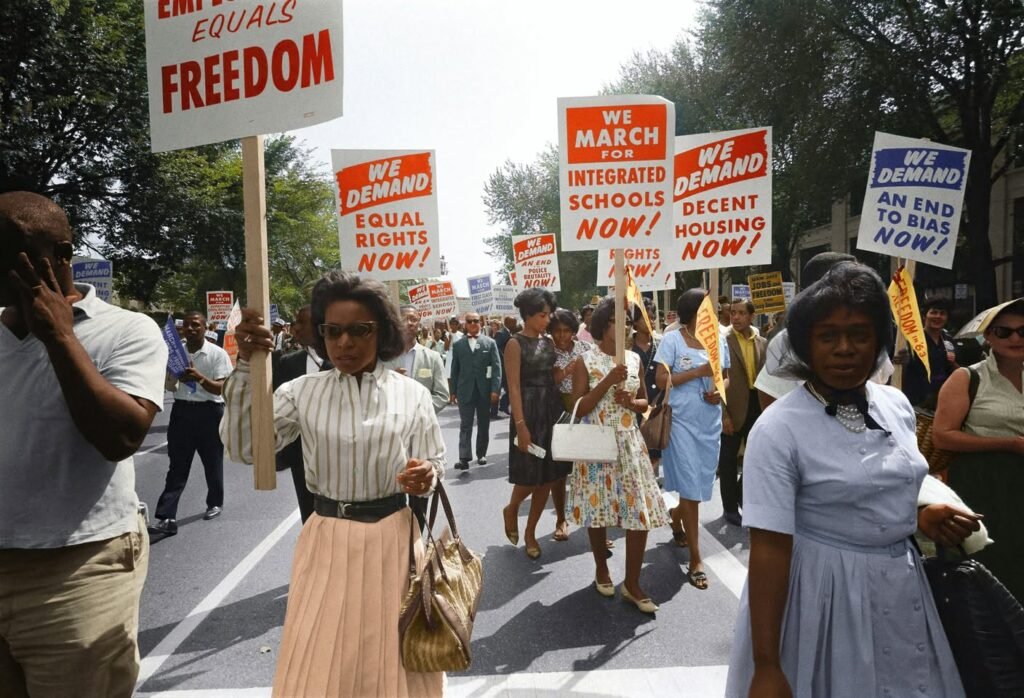
The Civil Rights Movement itself can be another source to help students recognize their sense of agency. Movements like the Nonviolent Coordinating Committee highlight this reality, even in the face of the struggles faced. You, as an educator, have the ability to bring to mind history and how students have made a difference, so that even students who feel powerless know that their powerlessness is a reminder that there is injustice in the world and that they can, from their position as students, take meaningful action to join with voices from history to promote change. Partnering with parents and communities will be vital.
Reminding yourself of history will remind you of what’s possible.
You’ve decided to be a teacher because of your passion for students and for learning. It’s this care for your students that can cause their challenges to take a toll on you as well. However, depending on your context, you may feel as though you don’t have the necessary support you need as you work to meet the needs of both the social and emotional sphere that comes into frame when trauma enters the classroom and the academic and educational objective sphere. Community can help you to meet the needs of both spheres. Learning more about the Civil Rights Movement and the actions taken by others to help meet community needs can help you to explore ways you can make your classroom a safe space for struggling students. Discover more about how the Civil Rights Movement can help you in your work in your community and your educational context when you purchase this recording of the Christian Courage and the Civil Rights Movement Webinar, led by Victor Vieth, JD, MA. Click here to open a new tab and place your order.
Why is it important for you, as an educator of today, learn from the Civil Rights Movement?
Conversations about the Civil Rights Movement that take place today often honor the courage and moments of the past. However, they also tend toward leaving behind what this means for change and reform in the world today. As an educator, your honoring the journey and facilitating student agency helps students who may otherwise feel powerless to find their voice even in the middle of challenges that can seem overwhelming.
How can societal challenges affect your students?
Experiencing challenges like police violence and actions of agencies like ICE that separate families can result in outcomes like disrupted attachment, student withdrawal, survivor’s guilt, difficulty in forming bonds, hypervigilance, and feelings of powerlessness. The social and emotional aspects of the student experience are just as much factors in achieving student success in meeting and exceeding learning outcomes as are those factors that are more strictly academic. For more insights into how community support can be vital in achieving student outcomes, click here to access The Ruth and Scott Podcast episode, 5Rs, 4 Pillars, and This Transformational Key to Change Your Life and Community.
What is agency? Why does it matter for students?
Agency is the sense of control your students have over actions and what happens as a result of those actions. When societal challenges rise or systems appear to be out of sync with the principles students expect, this sense of agency is disrupted. This feeling of lack of agency is compounded by the limited decision-making experience younger students often have, as it may not be something your students have even known that they’ve had until they feel its absence.
How can learning about the Civil Rights Movement help students who may feel powerless?
The worst thing that can be done when a sense of powerlessness occurs is to deny that it has occurred or that it is felt. Its existence is a felt reminder that there is injustice in the world. Learning about the Civil Rights Movement, and especially about the role that students have played in this Movement, helps students to build an understanding. They can take meaningful action to join with voices from history and to promote change.